Warehouse & Industrial Cleaning in Bristol
We provide warehouse and industrial cleaning for various sized sites across Bristol. We plan around your shifts and stock movement, covering floors and aisles to welfare facilities.
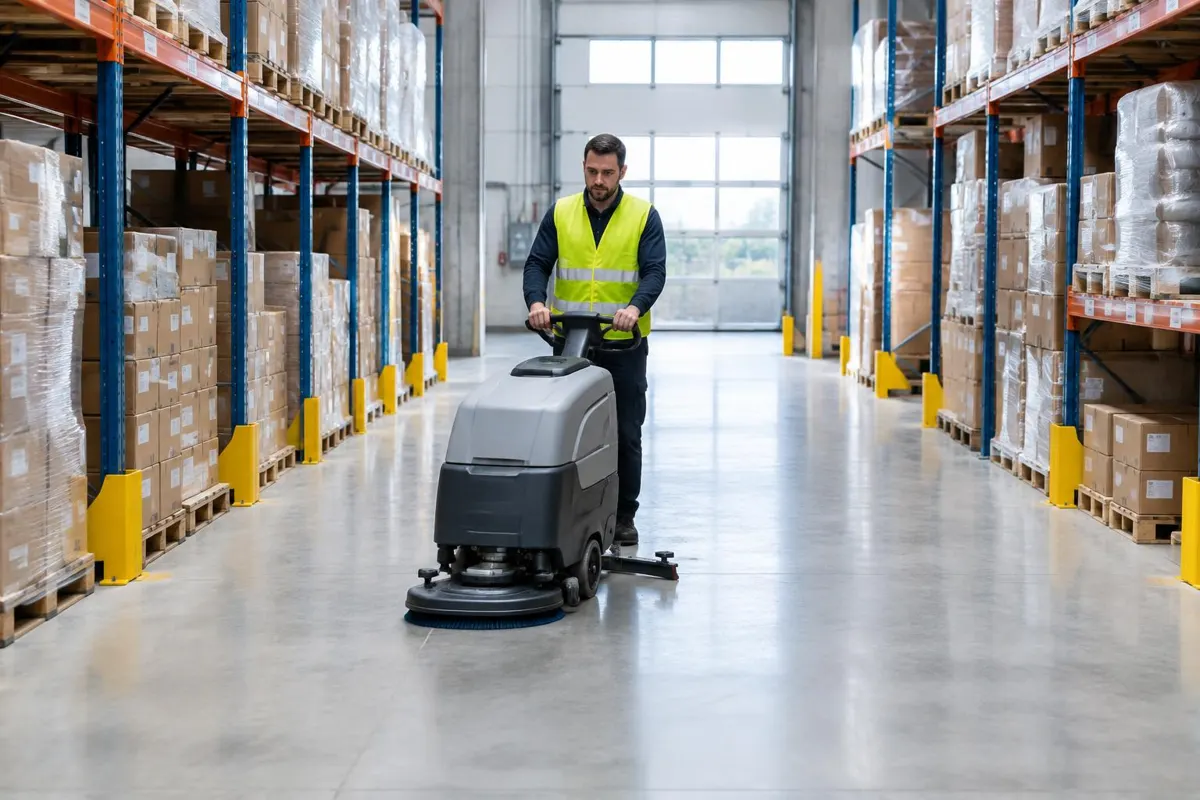
Our Warehouse & Industrial Cleaning Service
- Service
- Warehouse housekeeping and scoped industrial cleaning
- Facilities
- Logistics buildings, storage areas and factory welfare spaces
- Floor work
- Machine method subject to surface and access checks
- Schedule
- Shift gaps, segregated zones or planned shutdowns
- Coverage
- Bristol and South Gloucestershire; site access confirmed
What does industrial cleaning in Bristol include?
Industrial cleaning in Bristol can include accessible warehouse floors, low-level racking surfaces, walkways and staff welfare rooms. The work must distinguish ordinary dust and litter from hazardous substances or production residues. High-level structures, live machinery, tanks and confined spaces require separate assessment rather than being assumed within a general cleaning contract.
At the survey we ask what is stored or manufactured, where vehicles travel and which surfaces can be reached safely. A distribution warehouse handling boxed goods differs from a process plant. Product protection and the approved waste route should be established before any dust is disturbed.
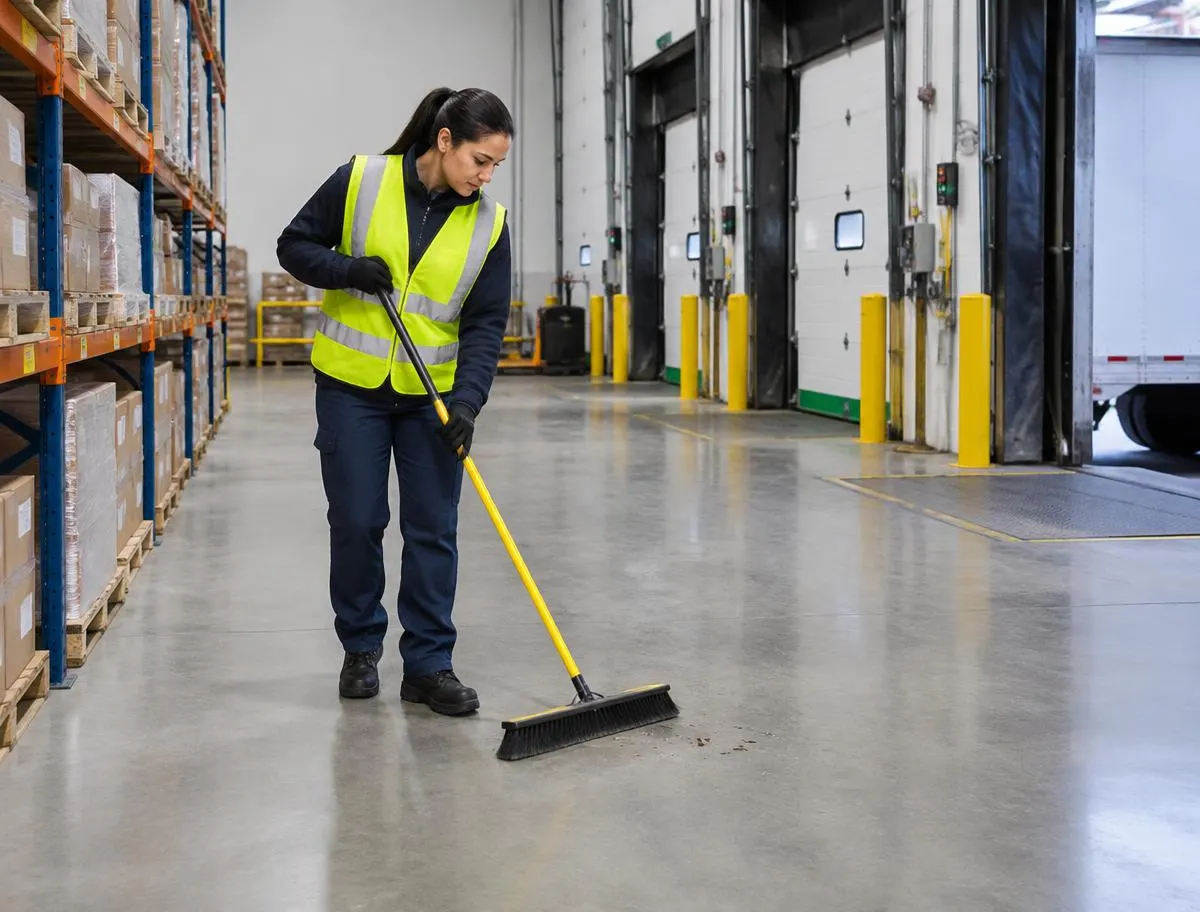
Typical tasks
- Remove loose litter from designated picking and pedestrian areas
- Assess compatible machine scrubbing for concrete or coated floors
- Wipe reachable empty racking surfaces where authorised
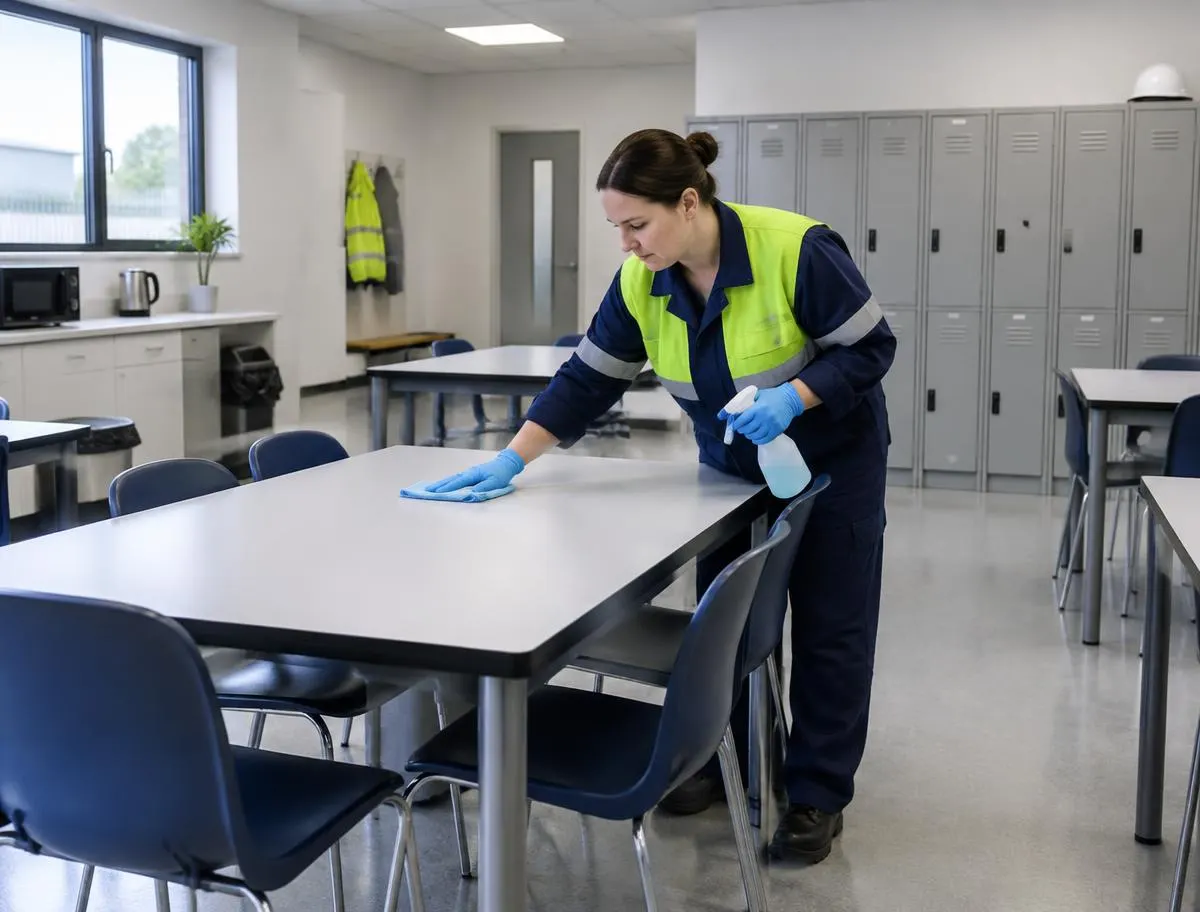
- Clean canteen tables, changing areas and staff toilets
- Remove accessible dust using a suitable assessed method
- Report damaged flooring or obstructions affecting safe cleaning
Free site survey
Request an industrial site review
Tell us what moves through your facility, which areas can close and where the cleaning problems persist.
- Written specification before any price
- Bristol and South Gloucestershire
How can cleaning work around forklifts and deliveries?
HSE guidance recommends separating pedestrian and vehicle activity wherever possible. A cleaning plan therefore needs more than a delivery timetable: it should identify crossing points, reversing areas and who controls access. If a safe working zone cannot be maintained, the task should wait for a suitable shutdown.
Picking aisles
Low-traffic window
Best forSeparate cleaning from stock movement
Welfare rooms
Between staff breaks
Best forKeep a usable facility available
High-level dust
Planned isolated area
Best forConfirm access equipment and product protection
Compare in a table
| Window or zone | Focus | Planning point |
|---|---|---|
| Picking aisles | Low-traffic window | Separate cleaning from stock movement |
| Welfare rooms | Between staff breaks | Keep a usable facility available |
| High-level dust | Planned isolated area | Confirm access equipment and product protection |
When is machine floor scrubbing appropriate?
Machine floor scrubbing is appropriate when the floor finish, contamination and clear working space suit the proposed machine and chemicals. It can help remove tracked-in soil over large accessible areas, but damaged coatings, joints and unusual residues need closer assessment. Water recovery and drying should be considered alongside the cleaning result.
A representative test area is useful before treating an entire aisle. We would discuss whether stock can stay protected on nearby pallets and how drainage works. Specialist floor restoration is different from routine scrubbing; neither should be described as repairing a damaged slab or removing every tyre mark.
Can high-level dust and racking be cleaned?
High-level warehouse cleaning depends on safe access, competent operators and control of falling debris. The method must account for occupied aisles, stored products and roof-level services.
How are factory cleaning costs calculated?
Factory and warehouse cleaning prices depend on reachable floor area, residue type, traffic restrictions, shift timing and any access equipment required. A broad square-metre figure cannot describe every industrial risk.
How do we arrange warehouse & industrial cleaning?
An industrial cleaning plan begins with operational risks and permitted working zones, then matches each task to a safe method and time. The site manager reviews the proposal before attendance is booked. Induction, traffic controls and restart checks are agreed explicitly, with specialist work excluded until its requirements and capability are confirmed.
- 1
Map the operation
Identify pedestrian lanes, vehicle routes, storage bays and production boundaries.
- 2
Classify the contamination
Distinguish ordinary dust from residues requiring specialist handling or disposal.
- 3
Agree segregation
Define who closes aisles and how workers and goods stay protected.
- 4
Confirm the task package
Review equipment, pricing, permits and the agreed scope.
- 5
Handover each zone
Check floor condition and access before the manager reopens an area.
Warehouse & Industrial Cleaning questions
Straight answers to the questions we hear most often. If yours is not here, ask us during your free survey.
Do you provide industrial tank cleaning?
Tank interiors are not part of a standard warehouse cleaning scope. They may involve confined-space entry, hazardous residues and specialist rescue or isolation arrangements. Do not infer this capability from the term industrial cleaning. Describe the vessel and its contents first so the need can be assessed without promising unsupported specialist work.
Can you clean racking while pallets stay in place?
Reachable exterior racking surfaces may be assessed while pallets remain, but goods, visibility and safe access can limit what is possible. Upper sections or enclosed bays may require emptying or protection. Agree the exact faces being cleaned and avoid any method that dislodges stock, wets packaging or compromises the storage structure.
Will floor scrubbing remove forklift tyre marks?
The outcome depends on the coating, tyre residue and how long marks have been present. A compatible test patch is more useful than a blanket promise of complete removal. Routine soil removal and restorative treatment may need different methods, and worn floor coatings cannot be restored simply by using stronger cleaning chemicals.
Are production machines cleaned during a factory visit?
Production equipment is included only where the scope, competence and safe isolation requirements have been agreed. General housekeeping does not authorise opening guards, moving components or working on live machinery. The site’s responsible technical staff should define restricted areas and any preparation needed before a contractor approaches the machine.
Can warehouse toilets be cleaned separately from the floor contract?
Welfare blocks can be scoped as a distinct cleaning package, with visit times chosen around staff breaks and shift changes. Include showers, lockers, canteen areas and consumable responsibilities where relevant. Separate task schedules help supervisors check these heavily used spaces rather than judging the whole contract from the appearance of a warehouse aisle.
Related services
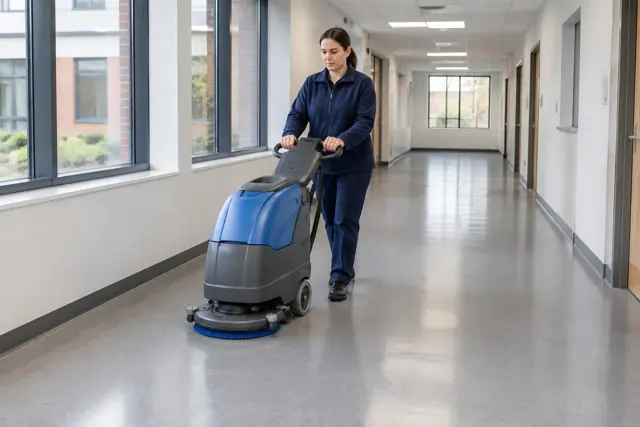
Give each industrial zone a workable plan
Tell us what moves through your facility, which areas can close and where the cleaning problems persist.