Commercial Window Cleaning in Bristol
We provide commercial window cleaning for various sized businesses across Bristol. We plan around your needs and opening times, covering shopfronts to upper-floor glazing.

Our Commercial Window Cleaning Service
- Premises
- Offices, commercial frontages and assessed buildings
- Scope
- Internal and external glazing listed separately
- Method
- Matched to reach, glazing and site conditions
- Public access
- Pedestrians and entrances considered in planning
- Height
- Specialist access only after assessment
- Frequency
- Set by exposure, use and presentation needs
What does commercial window cleaning in Bristol include?
Commercial window cleaning specifications in Bristol should identify each glazing elevation, internal or external face and any frames or sills included. Accessible entrance glass and shopfronts may have different requirements from upper office windows. Roof glazing, signs, conservatory structures and removal of construction deposits are separate items unless the assessed scope expressly includes them.
A window schedule avoids confusion about what counts as the building frontage. Where tenants share a building, establish whether the landlord already arranges any exterior work before commissioning an overlapping service for the same windows.
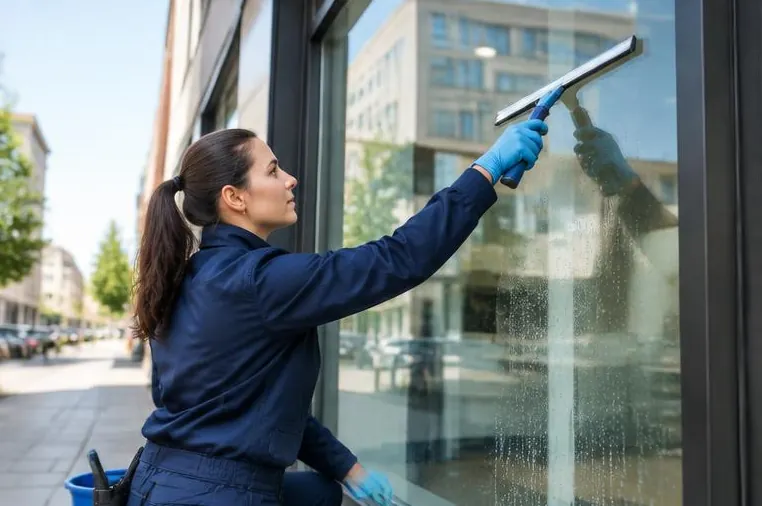
Typical tasks
- List internal and external glass faces
- Identify agreed frame and sill care
- Record excluded or inaccessible panes
- Separate construction residue removal
- Check landlord and tenant responsibilities
Free site survey
Arrange a glazing-access review
Share your elevations, access restrictions and preferred visit pattern to define the right scope for your building.
- Written specification before any price
- Bristol and South Gloucestershire
How are visits planned around staff and the public?
Busy pavements and shared courtyards may need permissions or controlled work zones. Internal access also needs coordination with meetings, alarms and confidential workspaces before each relevant visit.
- Coordinate doors and delivery bays
- Agree controlled pedestrian routes
- Clear internal sills before attendance
Shopfront visit
Accessible frontage and agreed frames
Best forCoordinate pavement and entrance use
Office visit
Specified internal and external panes
Best forArrange rooms and controlled routes
Specialist assessment
High or restricted glazing
Best forChoose access only after review
Compare in a table
| Window or zone | Focus | Planning point |
|---|---|---|
| Shopfront visit | Accessible frontage and agreed frames | Coordinate pavement and entrance use |
| Office visit | Specified internal and external panes | Arrange rooms and controlled routes |
| Specialist assessment | High or restricted glazing | Choose access only after review |
Which methods suit different glass and frames?
The method depends on glazing type, coatings, condition and safe reach. Suitable ground-based work may use water-fed poles, while accessible internal glass may suit a traditional applicator and squeegee. Check manufacturer guidance for coated, filmed or delicate glazing. Do not assume abrasive pads, blades or strong chemicals are acceptable on every transparent surface.
Inspect cracked panes, loose seals, damaged frames and existing scratches before work. Frames, vents and electrical fittings also need consideration so water is not directed into openings simply because the surrounding glass can tolerate it.
- Identify films and specialist coatings
- Record existing cracks and scratches
- Avoid unapproved scraping methods
- Protect vulnerable vents and fittings

Can high-rise or difficult windows be cleaned?
High-rise window cleaning needs specialist access only after assessment of the building, work position and surrounding risks. Ground-based methods should be considered where suitable; greater height does not automatically justify ladders or any particular equipment. Roof access, platforms or rope-access arrangements require their own competent planning and cannot be assumed within routine window cleaning.
The assessment must consider ground conditions, reach, obstructions, weather, falling objects and rescue arrangements where relevant. If the work cannot be undertaken safely within the proposed scope, revise the arrangement or refer it for suitable specialist provision.
Assess whether work at height can be avoided
Review site-specific access restrictions
Plan protection for people below
Require appropriate specialist arrangements
What information is needed for a window-cleaning quotation?
A quotation needs the glazing layout, approximate height, internal and external scope and proposed frequency. Access routes, parking, public-facing elevations and restricted courtyards can affect the plan as much as pane count. Include frames, sills, residue treatment and any specialist access request separately so proposals describe comparable work rather than a vague whole-building clean.
Your quotation
A fixed price after a free survey
- Provide photographs of every elevation
- List internal rooms needing access
- Describe obstructions and shared routes
How do we arrange commercial window cleaning?
A window-cleaning plan starts by mapping the glass and checking how it can be reached safely. We separate internal and external tasks, review surface restrictions and agree practical access windows. Any specialist height requirement needs its own assessment before inclusion, while routine scheduling should reflect exposure, building use and protection of people around the work.
- 1
Map the elevations
List glazing faces, frames, heights and exclusions.
- 2
Check surfaces
Review coatings, defects and unusual deposits.
- 3
Assess safe access
Consider ground-based options and specialist requirements.
- 4
Coordinate occupation
Agree rooms, entrances, pedestrian routes and timing.
- 5
Review the schedule
Set frequency and arrangements for changing site conditions.
Commercial Window Cleaning questions
Straight answers to the questions we hear most often. If yours is not here, ask us during your free survey.
How often should commercial windows be cleaned?
Frequency depends on exposure, frontage use and presentation priorities rather than a single rule for every building. The schedule should remain practical for access and weather rather than promise identical results between visits.
Are frames and sills automatically included?
No. They should be named in the specification, with the relevant faces and accessible areas identified. Tell the surveyor about fragile finishes or existing leaks so the method does not assume that all surrounding components can tolerate the same water exposure as glass.
Can high-rise cleaning be booked from photographs alone?
Photographs can support an initial discussion but do not establish safe access. Do not assume rope access, platforms or roof work are included in a routine window-cleaning request.
Will water-fed poles work on every building?
No. Their suitability depends on reach, obstructions, glazing, frame condition and the area where the operator would stand. Hoses and run-off also need managing around pedestrians and entrances. Some layouts require a different approach or a separately planned specialist service.
Can stickers and builders residue be removed?
Potentially, but this is a separate assessment from ordinary maintenance cleaning. Identify the residue and glazing information first, then agree any trial treatment and limitations without assuming every mark can be safely removed during a routine visit.
What should office staff prepare for internal windows?
Clear agreed sills, move small belongings and provide access to the rooms listed in the scope. Explain meeting-room bookings and security restrictions so internal access can be planned without disrupting confidential work.
Related services

Build a clearer glazing schedule
Share your elevations, access restrictions and preferred visit pattern to define the right scope for your building.