Communal Area Cleaning in Bristol
We provide communal area cleaning for various sized buildings across Bristol. We plan around your residents and access arrangements, covering entrances and stairs to lift lobbies and bin stores.

Our Communal Area Cleaning Service
- Clients
- Property managers, managing agents and landlords
- Core areas
- Shared entrances, stairs, corridors and lift interiors
- Private boundary
- Occupied flats excluded from shared-area routines
- Bin stores
- Accessible cleaning subject to waste and hazard assessment
- Records
- Visit notes and exception reporting agreed in advance
- Void scope
- Empty-unit cleaning specified as a separate instruction
What does communal cleaning in Bristol include?
Communal cleaning in Bristol can include entrance mats, shared corridors, stairs, handrails, lift interiors and agreed internal glazing. The specification should identify every shared space and its boundary. Private front doors, residents’ belongings and external areas are not automatically included simply because they can be reached from a communal hallway.
Start at the public entrance and follow each shared route, noting floor finishes, landings and secondary exits. A marked plan helps distinguish shared cleaning from caretaking, parcel handling and maintenance duties that may belong to someone else.
Typical tasks
- Vacuum entrance mats and accessible carpeted corridors
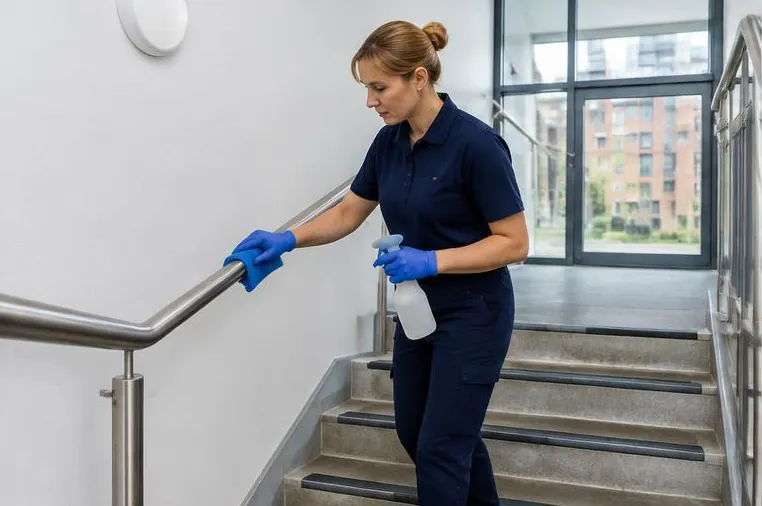
- Clean suitable stair treads and shared handrails
- Wipe agreed lift controls and interior surfaces
- Remove ordinary litter from clear shared routes
- Clean reachable internal entrance glazing where included
Free site survey
Discuss your managed building
Send the number of cores, shared facilities and current reporting needs to discuss a building-specific communal cleaning plan.
- Written specification before any price
- Bristol and South Gloucestershire
How often should shared entrances and stairwells be cleaned?
The managing agent should identify quieter times, delivery patterns and any access restrictions for individual cores. The schedule should describe attendance expectations without implying an uninterrupted on-site caretaker service.
- Set frequencies by zone rather than floor area alone
- Review entrance soiling during wet weather
- Agree failed-access and blocked-route reporting
Routine visit
Entrances, shared routes and agreed touchpoints
Best forFrequency reflects traffic and surface type
Periodic detail
Carpet edges, reachable glazing and floor care
Best forAgree resident access and drying arrangements
Separate instruction
Empty-unit or assessed bin-store work
Best forConfirm authority, hazards and exclusions first
Compare in a table
| Window or zone | Focus | Planning point |
|---|---|---|
| Routine visit | Entrances, shared routes and agreed touchpoints | Frequency reflects traffic and surface type |
| Periodic detail | Carpet edges, reachable glazing and floor care | Agree resident access and drying arrangements |
| Separate instruction | Empty-unit or assessed bin-store work | Confirm authority, hazards and exclusions first |
How are lifts, stair finishes and shared surfaces protected?
Shared buildings often combine carpet, painted metal, stone and coated lift panels within a short route. Choose compatible methods for each finish and keep moisture away from lift controls and door mechanisms. Lift machinery, electrical systems and repairs are outside routine cleaning, even when a problem becomes visible during a visit.
Ask for care guidance on natural stone, specialist floor coatings and decorative panels before selecting chemicals. Cleaning can reveal defects, but reporting them is not the same as assessing their structural safety or completing a repair.
- Identify delicate stone and coated lift finishes
- Avoid spraying directly into controls or mechanisms
- Report loose nosings and damaged handrails
What happens with bin stores, dumped items and empty flats?
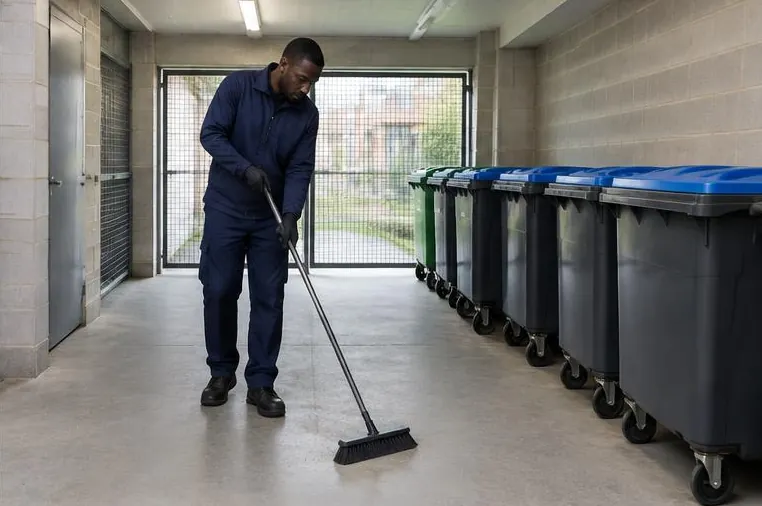
Bin-store cleaning needs a defined boundary around accessible surfaces, ordinary litter and waste already managed through the building’s collection arrangements. Dumped furniture, sharps, bodily contamination or pest activity need reporting and separate assessment. Void cleaning concerns an authorised empty property and should not be assumed within a shared-hallway cleaning instruction.
Agree whether bins can be moved safely, who controls collection timing and what happens if bags split or hazardous items appear. Clearance, pest treatment and specialist contamination work should be distinguished from cleaning before a separate scope is accepted.
Report hazardous or unidentified waste before handling
Keep bulky-item clearance outside routine assumptions
Scope each empty property separately from common parts
What information does a property manager need for a quotation?
The number of entrances, floors, lifts and bin stores shapes a communal cleaning quotation alongside surface types and attendance frequency. Several small stair cores can involve more access time than one open lobby. Supply a shared-area schedule and reporting requirements so proposals describe the same boundaries, rather than comparing floor area alone.
Your quotation
A fixed price after a free survey
- Count separate cores, lifts and external shared spaces
- List access devices and water points
- Specify reporting format and authority for extra work
How do we arrange communal area cleaning?
A communal cleaning plan begins by tracing the parts of the building residents share. Agree boundaries, access and reporting with the managing contact before setting frequencies. The written specification should distinguish routine cleaning from maintenance and one-off work, then provide a practical way to record missed access, hazards and changes requiring approval.
- 1
Walk each shared route
Map entrances, stairs, lifts, corridors and any included external spaces.
- 2
Mark ownership boundaries
Identify private doors, resident belongings and areas managed by others.
- 3
Agree access logistics
Confirm fobs, water points, storage and safe working windows.
- 4
Set the reporting route
Name who receives visit exceptions, defects and requests for additional work.
- 5
Review building use
Adjust the agreed plan when occupancy, soiling or access conditions change.
Communal Area Cleaning questions
Straight answers to the questions we hear most often. If yours is not here, ask us during your free survey.
Can residents request extra work directly from the cleaner?
Residents can raise concerns through the building’s agreed reporting route, but additional work should be authorised by the managing contact. A request at the doorway should not automatically expand the contracted scope or override safe access arrangements.
Are private flat doors included in a communal-area visit?
Only if the specification expressly includes an agreed surface and method. Cleaning inside an occupied flat is a different instruction requiring appropriate permission and access arrangements.
Can cleaners remove furniture left in a stairwell?
Bulky items should be reported to the managing contact rather than treated as ordinary litter. A communal cleaning visit does not automatically authorise disposal of residents’ possessions, even when an item is inconvenient or appears to have been abandoned.
What does an empty-property clean add to the shared-area service?
A void clean concerns a particular authorised empty unit, not the shared route outside it. Repairs, clearance and specialist contamination should be separated from cleaning, so the managing agent can approve a realistic scope for that individual property.
Can visit reports include photographs for the managing agent?
Photographs can be discussed, but agree what they should show, who receives them and how residents’ privacy is protected. The reporting method should support the agreed cleaning scope rather than implying surveillance or a general inspection of residents’ activities.
Who deals with damaged flooring or a faulty lift noticed during cleaning?
The cleaner can report visible defects through the agreed contact route, but maintenance decisions remain with the responsible manager and suitable contractors. Stop or restrict a task if the condition prevents safe work. Agree how urgent issues are escalated before attendance begins.
Related services
Make your shared-area specification clearer
Send the number of cores, shared facilities and current reporting needs to discuss a building-specific communal cleaning plan.