Retail & Showroom Cleaning in Bristol
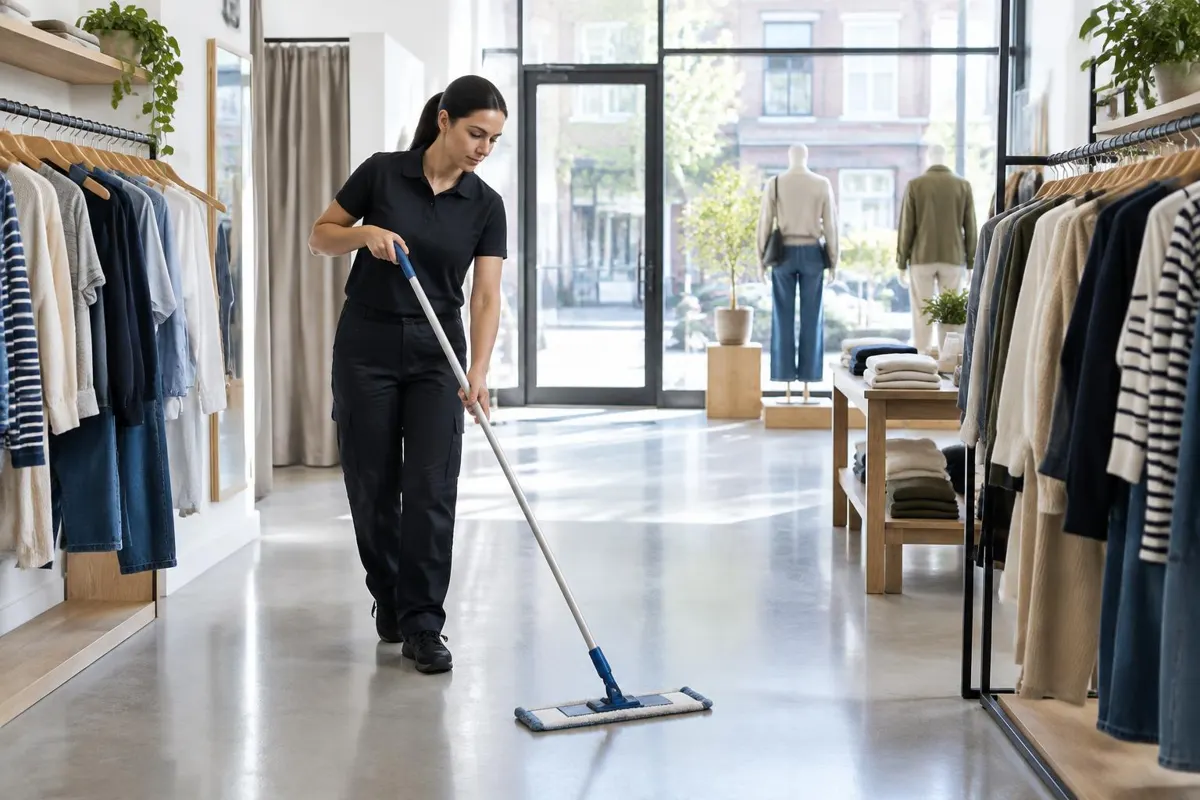
We provide retail and showroom cleaning for various sized businesses across Bristol. We plan around your opening times and deliveries, covering entrances and floors to fitting rooms.
Our Retail Cleaning Service
- Service
- Shop-floor and retail staff-area cleaning
- Stores
- Independent shops, shopping-centre units and display-led retail
- Hours
- Before opening or after closing, by agreement
- Frequency
- Matched to footfall, trading days and store layout
- Stock protection
- Merchandise moved only with explicit permission
- Area
- Bristol retail districts and South Gloucestershire enquiries
What is included in retail cleaning in Bristol?
Retail cleaning in Bristol typically focuses on accessible sales floors, entrance areas, fitting rooms, checkout surrounds and staff facilities. The specification should identify glass, display materials and surfaces that cannot be wetted. Cleaning fixtures does not mean rearranging stock, opening tills or touching customer orders without explicit store-manager authorisation.
A stock-heavy shop has different access from a sparse showroom. We would inspect narrow aisles, low shelves and hidden floor edges before estimating visit time. Products displayed on the floor or delicate paper packaging may require store staff to clear the area first.
Typical tasks
- Remove grit and litter from accessible entrance flooring
- Vacuum or mop clear sales-floor routes using compatible methods
- Wipe agreed counter surfaces and customer touchpoints
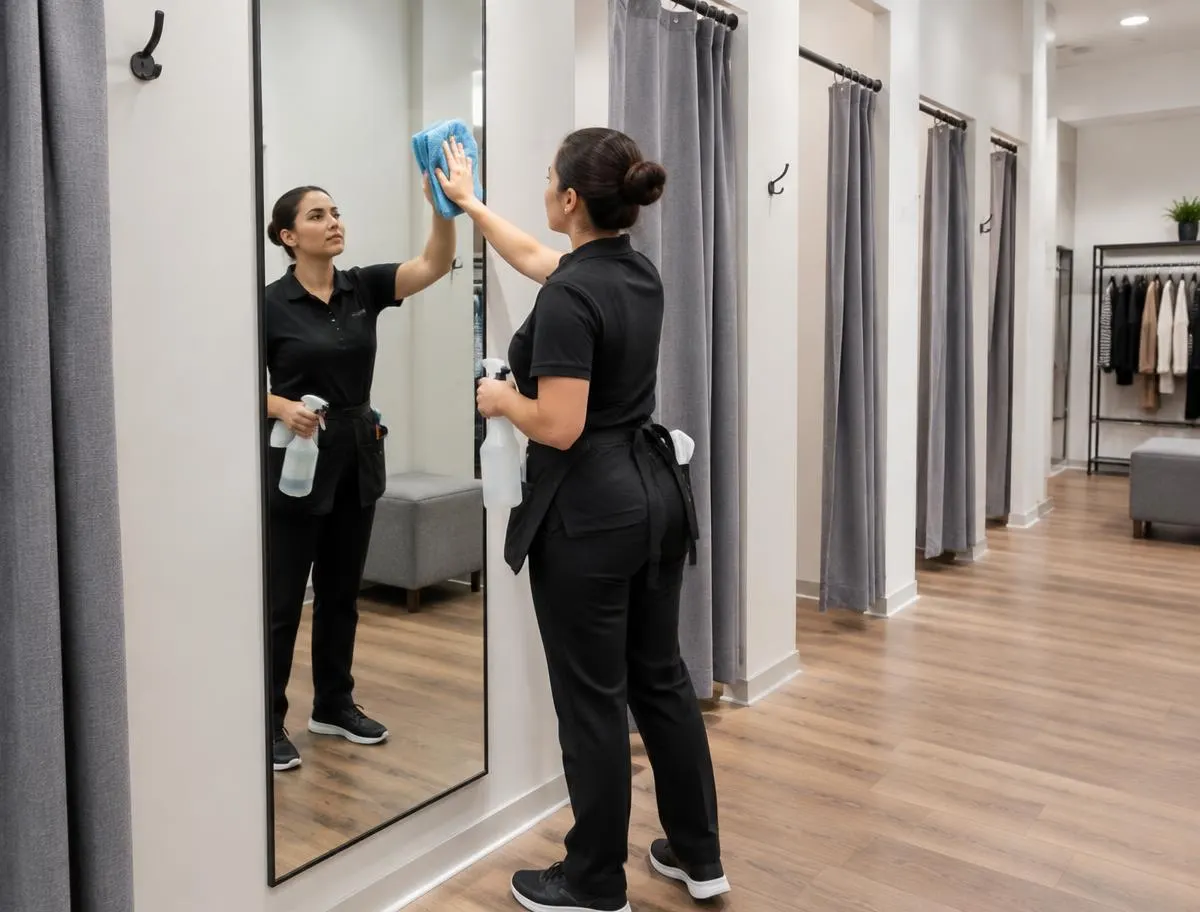
- Clean empty fitting-room floors, mirrors and hooks
- Dust accessible display fixtures without handling merchandise
- Clean staff toilets and agreed break-room surfaces
Free site survey
Arrange a retail survey
Share your store layout, opening routine and any stock restrictions for a tailored retail cleaning proposal.
- Written specification before any price
- Bristol and South Gloucestershire
When should a shop be cleaned without delaying opening?
Sales periods, seasonal deliveries and late-night openings can change the plan. A short daily entrance clean may be more useful than a longer visit that clashes with unloading. Where trading cannot pause, agree small segregated sections; warning signs alone are not a complete strategy for keeping shoppers away from wet flooring.
Before opening
Entrance, counters and fitting rooms
Best forFinish before stock replenishment peaks
After closing
Sales-floor routes and staff rooms
Best forManager clears sensitive or obstructed areas
Periodic visit
Detailed fixtures and floor treatment
Best forPlan around campaigns and display changes
Compare in a table
| Window or zone | Focus | Planning point |
|---|---|---|
| Before opening | Entrance, counters and fitting rooms | Finish before stock replenishment peaks |
| After closing | Sales-floor routes and staff rooms | Manager clears sensitive or obstructed areas |
| Periodic visit | Detailed fixtures and floor treatment | Plan around campaigns and display changes |
How are displays, mirrors and shopfront glass protected?
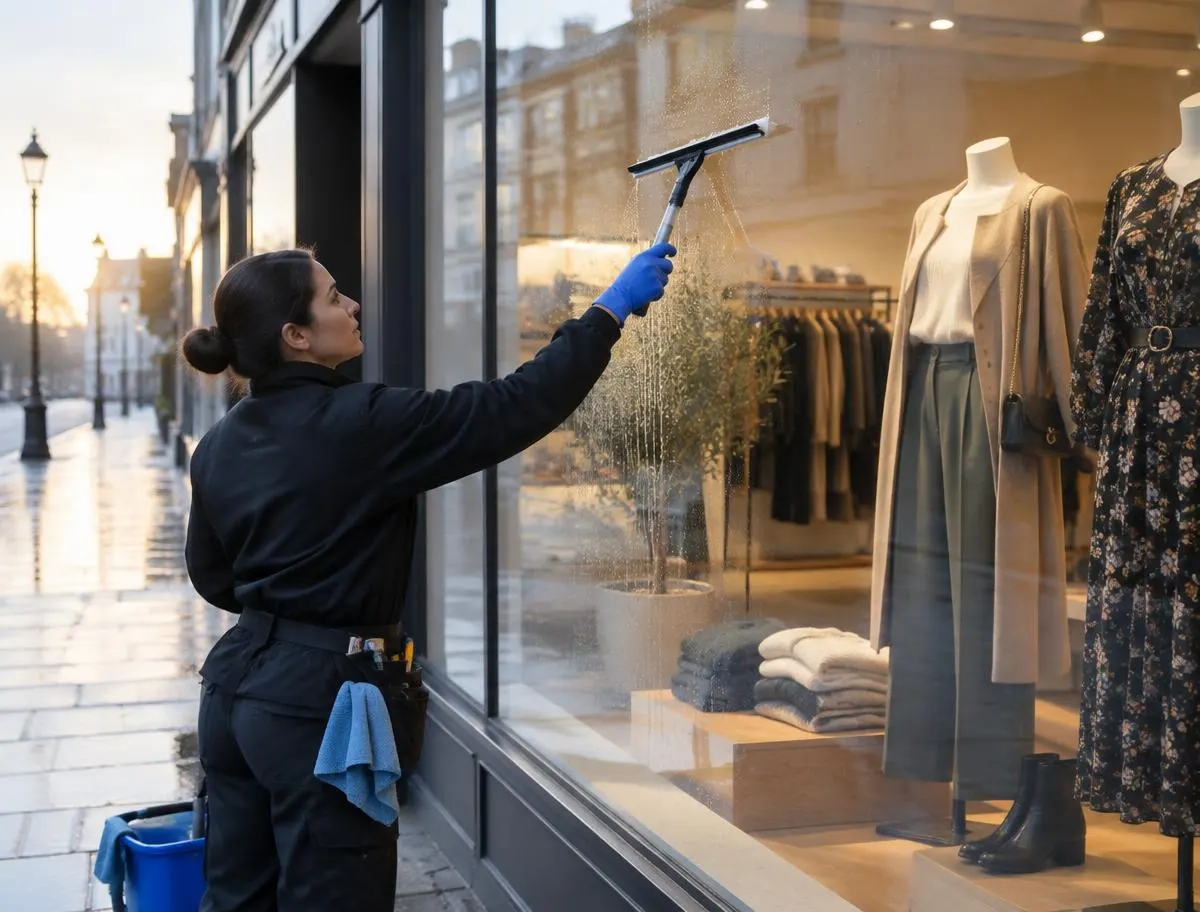
Display cleaning needs a material-specific approach that preserves finishes and avoids transferring chemicals onto stock. Mirrors and internal glass may be included where safely reachable; exterior shopfront glazing is a separate scope if specialist access is needed. Agree which promotional signs, screens and fragile fixtures must remain untouched during the visit.
Acrylic, coated metal and untreated timber should not automatically receive the same spray. Ask the manager for care guidance supplied by fixture manufacturers. Window stickers, security sensors and point-of-sale electronics need particular caution. We record restricted surfaces rather than assuming every shiny display can be polished in the same way.
Does a food shop need a different cleaning schedule?
Food retail needs cleaning responsibilities aligned with the shop’s food safety procedures, especially around unpackaged food, preparation counters and chilled displays. A general retail floor specification does not replace food-contact routines or staff hygiene checks. Separate the sales-floor contract from any catering or preparation-area scope before agreeing products and access.
The Food Standards Agency publishes Safer food, better business guidance for retailers. A convenience store with open food needs different arrangements from a clothing shop, including stock protection and clear chemical storage. Refrigeration maintenance, temperature checks and removing expired products remain outside cleaning unless separately assigned to qualified staff.
What influences retail cleaning prices?
Retail cleaning prices vary with floor finish, aisle density, fitting-room use, opening pattern and the amount of stock obstructing access. Street-front glass and centre-mandated security procedures can add work beyond routine floor care.
How do we arrange retail cleaning?
Setting up retail cleaning starts with the store layout, merchandise risks and opening routine. We then agree which fixtures can be touched, choose suitable methods and prepare a priced schedule. The manager confirms access before a first visit, with later reviews focused on fitting rooms, entrances and the places customers notice most.
- 1
Follow the shopper route
Walk from the entrance through displays, fitting rooms and checkout areas.
- 2
Mark protected stock
Identify packaging, fixtures and electronics that cleaning must avoid.
- 3
Choose a trading window
Coordinate keys, security checks, deliveries and floor drying time.
- 4
Approve the store checklist
Set frequencies and inclusions with the responsible store manager.
- 5
Review presentation points
Check high-footfall edges and adapt the agreed plan when layouts change.
Retail Cleaning questions
Straight answers to the questions we hear most often. If yours is not here, ask us during your free survey.
Can you clean fitting rooms between store opening days?
Fitting rooms can be included with floors, mirrors and accessible hooks on an agreed schedule. Store staff should remove abandoned merchandise, security tags and customer belongings before the cleaner begins. Busy promotional periods may justify closer attention than quieter weeks; the task frequency should reflect actual use rather than treating every room as identical.
Do cleaners rearrange products on shelves?
Product handling is not assumed within a retail clean. The store should decide which items staff will move and which fixtures may be dusted in place. This protects stock accuracy and avoids damage to packaging or delicate displays. Any approved movement should be specific, limited and recorded in the store checklist.
Is outside shopfront glass included?
Exterior glass may require a separate window-cleaning visit depending on height, pavement access and the building’s arrangements. Internal spot cleaning does not mean the entire frontage is covered. Check whether your landlord or shopping-centre manager already provides exterior cleaning before commissioning work, so responsibilities and access permissions are clear.
Can you help after a retail fit-out?
A newly fitted unit often needs post-construction dust removal and attention to adhesive residue before stock goes in. This is different from routine shop cleaning and should follow contractor handover, safe access and surface-care checks. Tell us which trades have finished and whether fixtures, packaging or building waste remain in the unit.
Do you clean motor showrooms as part of retail cleaning?
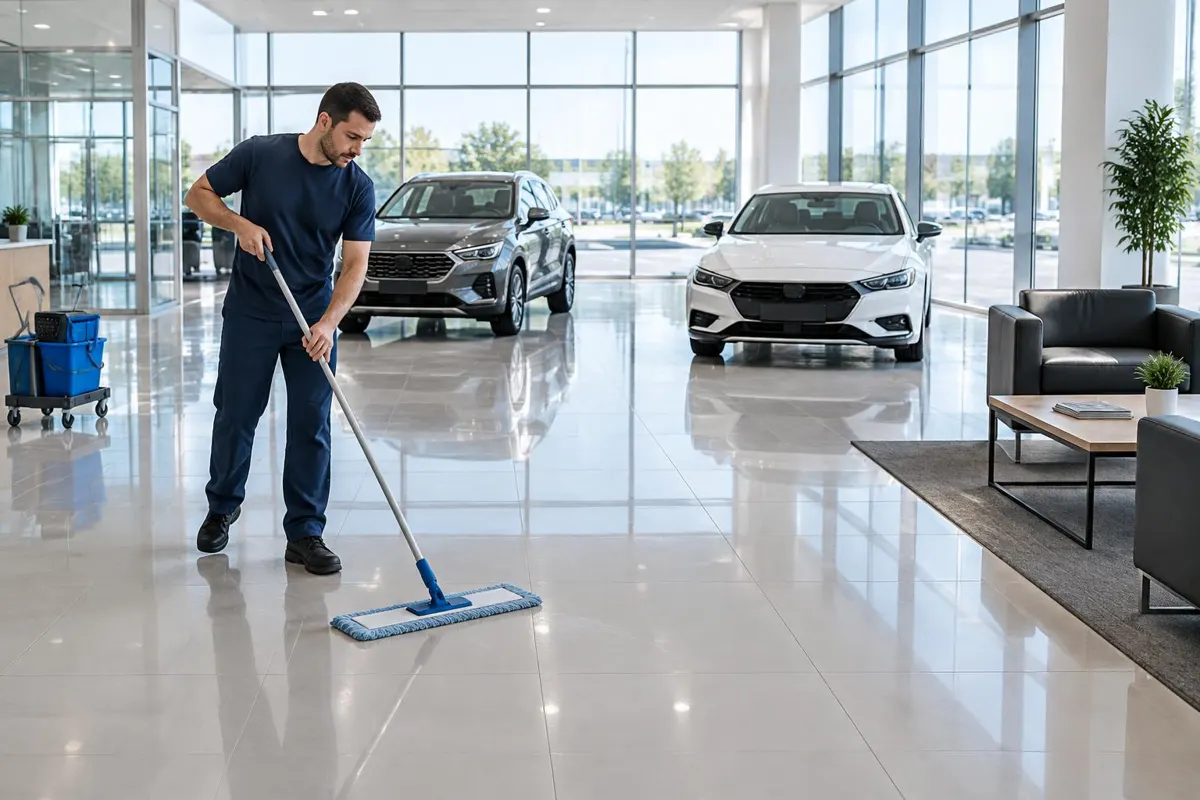
Vehicle showrooms share retail presentation needs but also involve large polished floors, vehicle clearances and service reception boundaries. They should be assessed as their own premises type rather than treated like a shop aisle. Valeting, workshop equipment and customer vehicles must remain separate from any agreed showroom building-cleaning scope.
Related services
Keep the shop ready before the doors open
Share your store layout, opening routine and any stock restrictions for a tailored retail cleaning proposal.