Gym, Spa & Leisure Centre Cleaning in Bristol
We provide gym and leisure cleaning for various sized facilities across Bristol. We plan around your members and opening times, covering equipment areas to changing rooms and showers.

Our Gym & Leisure Cleaning Service
- Spaces
- Gyms, studios, changing rooms and agreed spa areas
- Equipment
- Accessible surfaces subject to manufacturer guidance
- Wet areas
- Showers and changing floors scoped separately
- Timing
- Early, late or phased access subject to agreement
- Pool boundary
- No pool water treatment within premises cleaning
- Reopening
- Drying and safe member access planned into visits
What do gym cleaning services in Bristol cover?
Gym cleaning services in Bristol can cover accessible equipment touchpoints, studio floors, reception areas, toilets and changing facilities. The checklist should identify which machines can be cleaned and how they are made safe. Member wipe-down stations remain a separate operational routine rather than a substitute for an agreed premises cleaning schedule.
A free-weights room differs from a yoga studio or a spa reception. Personal belongings, plugged-in accessories and equipment controls need clear handling restrictions so cleaning does not become an unauthorised inspection or maintenance task.
Typical tasks
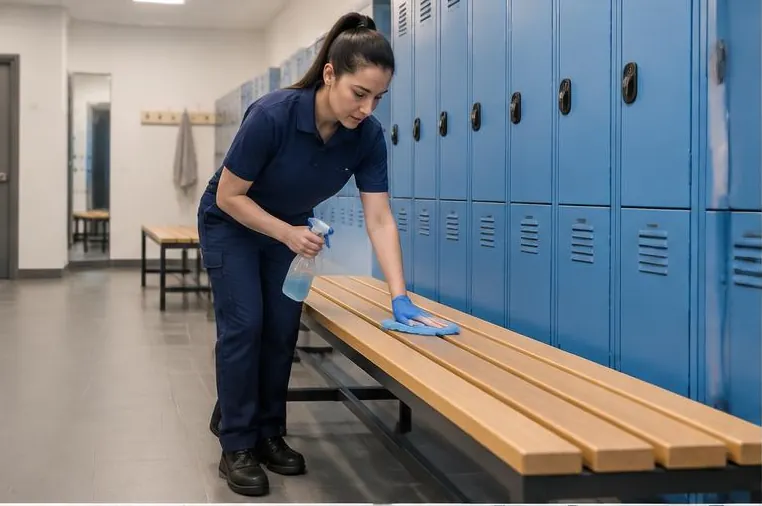
- Wipe approved handles and bench surfaces
- Clean accessible studio mirrors and floor edges
- Attend toilets, basins and changing-room benches
- Remove litter from agreed member circulation routes
- Clean empty locker interiors only when specifically included
Free site survey
Plan your leisure cleaning
Share your class timetable, changing-room layout and equipment restrictions to explore a workable leisure cleaning scope.
- Written specification before any price
- Bristol and South Gloucestershire
When should a gym be cleaned around classes and members?
Build the plan around the busiest transitions, such as the gap between a spin class and changing-room demand. Overnight access also needs a practical arrangement for alarms, lone working and contact with the operator when unexpected problems occur.
- Reserve studio windows outside setup and class times
- Plan changing rooms in usable sections where appropriate
- Agree who authorises closure and reopening
Before peak attendance
Reception and released training zones
Best forAllow time for safe reopening
Between agreed sessions
Cleared studios and selected touchpoints
Best forDo not displace class setup
Planned wet-area closure
Showers and changing floors
Best forSeparate members from wet work
Compare in a table
| Window or zone | Focus | Planning point |
|---|---|---|
| Before peak attendance | Reception and released training zones | Allow time for safe reopening |
| Between agreed sessions | Cleared studios and selected touchpoints | Do not displace class setup |
| Planned wet-area closure | Showers and changing floors | Separate members from wet work |
How are rubber flooring, upholstery and fitness equipment protected?
Gym surfaces need compatible products rather than a single spray used everywhere. Rubber tiles, sprung studio floors, coated frames and upholstered pads can have different restrictions. Follow manufacturer instructions and avoid introducing moisture into electrical components. Cleaning should not involve dismantling machines, adjusting mechanisms or applying finishes that change the intended floor grip.
Check product suitability on the actual surface and identify damaged seams or worn pads before work. The operator should refer damaged or malfunctioning equipment for maintenance rather than treating cleaning as a repair.
- Record floor finishes by training zone
- Identify screens and powered components needing restricted handling
- Report damaged upholstery and lifted floor edges
How are showers, spa areas and pool surrounds handled?
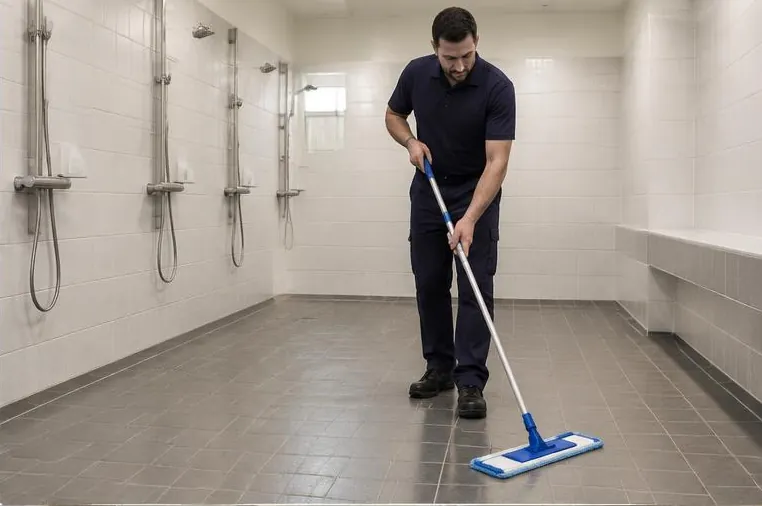
Wet-area cleaning needs a separate method for soap residue, scale and safe footing. Agree shower access, suitable products and drainage limitations before work begins. Pool surrounds or spa premises may be considered within a defined scope, but pool water testing, chemical dosing and treatment-system operation are not part of general gym cleaning.
Wet floors can remain hazardous even when they look clean, so plan separation and drying rather than relying only on signs. Report those defects to the operator and avoid promising that repeated washing will remove the underlying cause.
Segregate shower cleaning from member use
Identify drainage problems and damaged seals
Keep water-treatment equipment outside the cleaning scope
What affects a gym or leisure cleaning quotation?
The mix of equipment, class turnover, shower use and opening hours matters as much as total floor area. A dry training studio has different demands from a leisure building with extensive wet changing facilities. Specify daily tasks, periodic detail and any consumable duties separately before agreeing visit frequency and access windows.
Your quotation
A fixed price after a free survey
- Count showers, toilets and changing facilities
- List floor types and equipment access restrictions
- Separate daytime staff tasks from scheduled cleaning
How do we arrange gym & leisure cleaning?
Planning begins with a walk through the member journey and a check of the weekly timetable. Identify equipment restrictions, wet areas and workable closures before setting frequencies. The agreed checklist should name operator responsibilities as well as cleaning tasks, with a clear method for reporting damage or rooms that cannot be released.
- 1
Trace member movement
Identify busy routes between reception, training areas and changing facilities.
- 2
Inspect the finishes
Record rubber, timber, upholstery and equipment care restrictions.
- 3
Choose closure windows
Agree realistic access around classes and round-the-clock membership.
- 4
Allocate operational duties
Separate staff wipe stations and spill response from contracted visits.
- 5
Check the return to use
Review drying, reported defects and the operator’s reopening arrangements.
Gym & Leisure Cleaning questions
Straight answers to the questions we hear most often. If yours is not here, ask us during your free survey.
Does equipment cleaning replace members wiping machines after use?
No. Member wipe-down arrangements and staff checks are operating routines that sit alongside scheduled cleaning. It should not imply that every machine is cleaned after every user, or that occasional deep cleaning replaces the operator’s ongoing hygiene and inspection responsibilities.
Can a twenty-four-hour gym stay open during cleaning?
Possibly, if the operator can provide safe separation and realistic access to each zone. A quiet period is not automatically a safe work window, especially where wet floors, cables or cleaning machinery would overlap with member movement.
Is swimming-pool water treatment part of leisure cleaning?
No. Pool water testing, chemical dosing, filtration management and treatment-system operation are outside this premises cleaning scope. Keep responsibilities explicit so a cleaner attending changing rooms is not assumed to monitor water quality or operate specialist plant without an appropriate separate arrangement.
Can rubber gym floors be cleaned with the same method as studios?
Not automatically. Rubber flooring and studio finishes may have different manufacturer requirements, including restrictions on chemicals, moisture and mechanical action. Inspect the specific material and condition before choosing a method. Record any damaged tiles or lifted edges for the operator to address.
Will shower cleaning solve recurring mould or unpleasant smells?
Cleaning may address accessible surface deposits, but recurring mould or odours can involve ventilation, drainage, failed seals or hidden moisture. Any additional treatment should follow assessment of the surface and safe product use.
Can cleaners handle towels and refill member products?
Towel handling and product replenishment need explicit agreement, including storage, quantities and hygiene instructions. The operator should also identify a contact for shortages, damaged dispensers or items left in changing areas.
Related services
Build a cleaning plan around your members
Share your class timetable, changing-room layout and equipment restrictions to explore a workable leisure cleaning scope.